
Take a walk around the Earth Sciences Building and you will discover 21 stunning stone slabs decorating the wall around the building’s north-west wing. These polished slabs of rock are more than just a decorative facade. They are a set of hands-on geology lessons, built right into the building.


Each slab comes from a different corner of the world. Each tells a different story about how rocks form, change, and move through deep time.
They are all numbered and labeled so you can follow along and explore at your own pace. Whether you’re a curious visitor or a geology student on the move, these slabs are a ticket to exploring Earth’s rocky past – no lab coat or hiking boots required.
Ready to rock? Download this PDF guide, find the slabs using the map shown here, and explore these intriguing slices of our beautiful Earth.
Learn more about these beautiful slabs of stone using links below or use the left-hand menu.
Originally authored by Mary Lou Bevier; re-written in 2025 with new images by F. Jones. Pacific Museum of Earth, Department of Earth, Ocean and Atmospheric Sciences, University of British Columbia, Vancouver, BC. Thanks for excellent feedback from PME staff and volunteers who made insightful suggestions for improving or correcting this content.
About these rock slabs
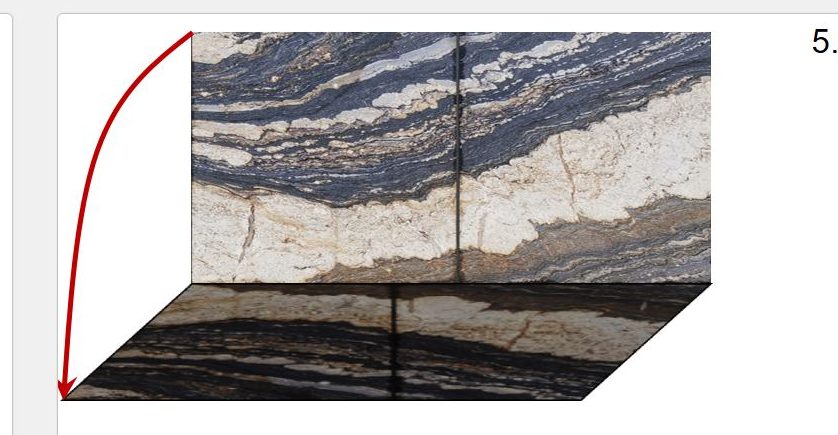
Inkblot slabs? Folded rocks? We are looking at a meeting between geology and architectural design! Each slab is actually made

North Wall Rock Slabs
Storied rocks with a view; along the north-facing wall of the Earth Sciences Building you will meet six spectacular slabs,
West Wall Rock Slabs
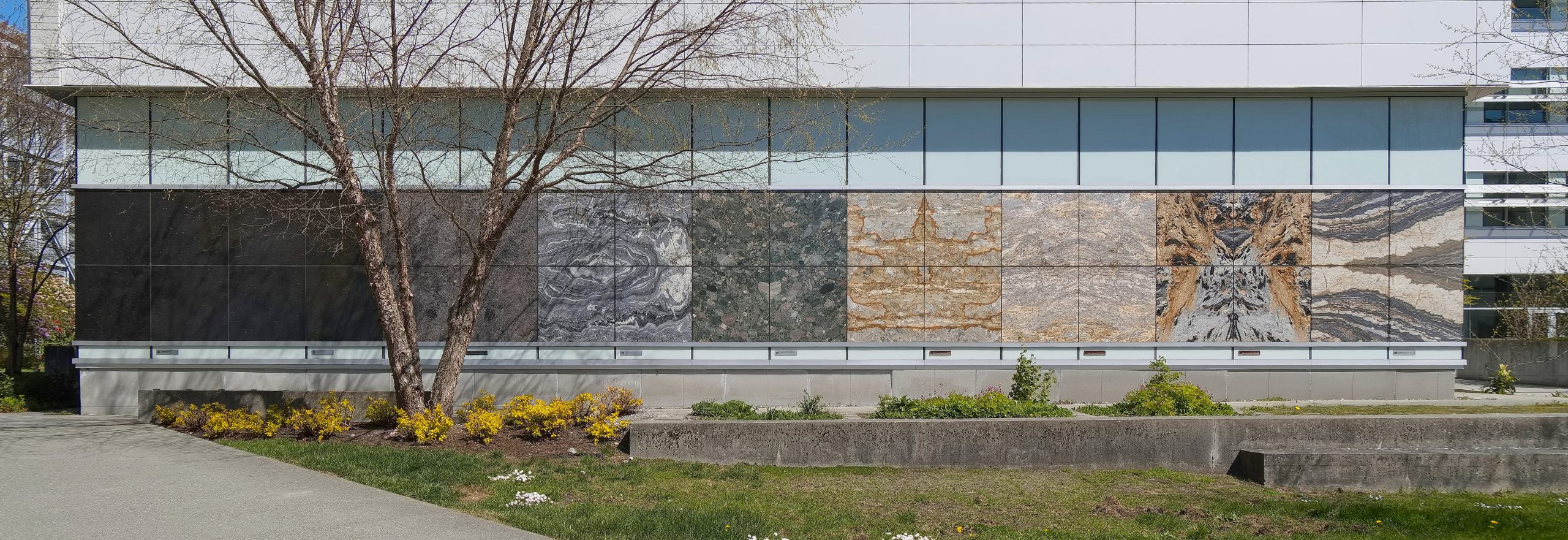
Bold patterns, deep stories; this side of the building showcases some of the darkest, most dramatic slabs in the collection;
South Wall Rock Slabs
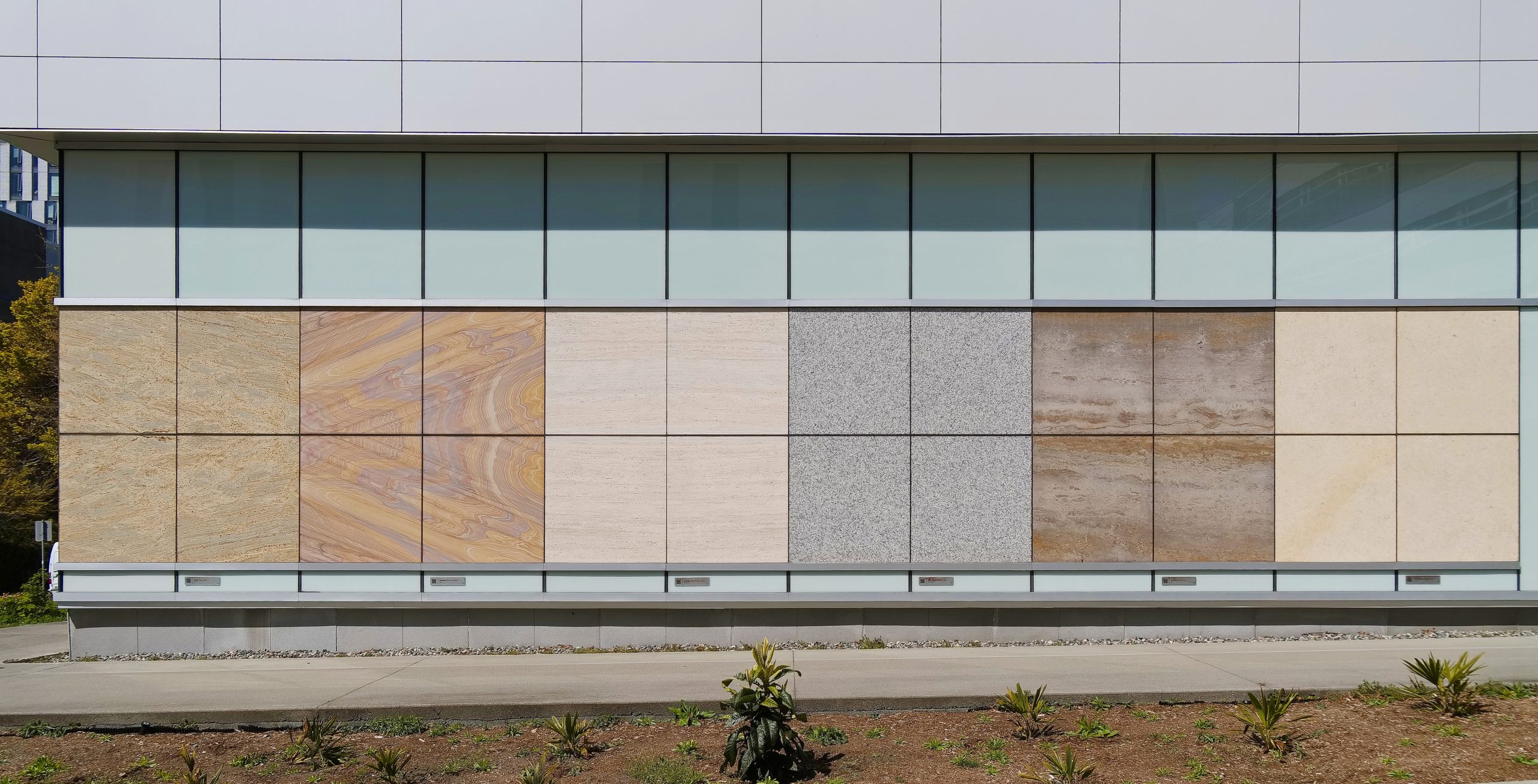
The sunny south side; four of these warm slabs are sedimentary rocks. These are generally “softer” (although not exactly fuzzy!)